
Romance · Published by EpicHear
The Duet We Denied
A Name Beside Mine
First 5 episodes free · 4 more: 4 coins, or free with the 24-hour wait (1 episode a day).
1 coin = 1 episode
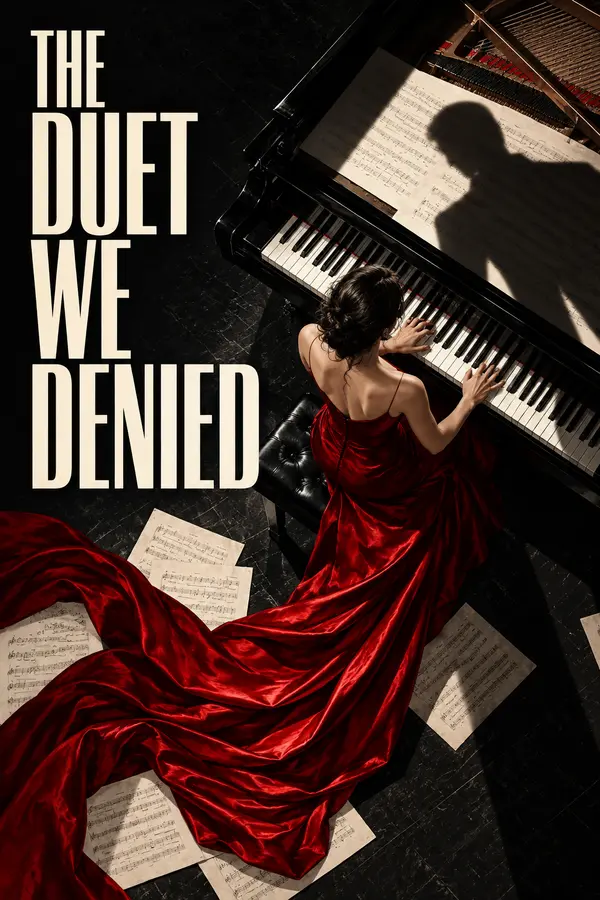
About this book
Singer Mara Voss never expected to perform with the man she once loved and failed. When Noah returns to write one last duet, desire reignites alongside a bitter dispute over their early songs. Choosing each other again will mean risking the careers—and the comforting lies—they built apart.
ABOUT CHAPTER 4
A Name Beside Mine
Mara faces her role in Noah's lost credit and begins making amends without asking for forgiveness in return.
Ep 4 · A Name Beside Mine
Share a short audio preview
Create up to 20 seconds from 0:00. Available for free opening episodes. Preparing a clip downloads this episode on your device.
Read episode 4
Yes, Mara wrote. They were final.
She waited for another message. None came.
At ten the next morning, Noah was already at the piano. A second music stand faced hers, positioned farther away than it had been the previous day.
“Would you rather stop?” she asked.
“I'd rather you tell me why.”
Mara sat down. She had prepared several versions on the walk downstairs. Each made her sound slightly better than she had been. She discarded them.
“I thought if I argued, the record would disappear.”
“You thought my name would make it disappear?”
“My father said the label wanted one story. A young woman writing alone in her bedroom. He said shared credits would complicate the campaign.”
Noah looked toward the doors. “And that was enough?”
“It shouldn't have been.”
“That isn't what I asked.”
“Yes,” she said. “At the time, it was enough.”
His face moved as though she had finally found the place that hurt.
“I told myself I'd put it right after the album came out,” she continued. “Then after the tour. Then you weren't there, and asking would mean admitting what I'd done.”
“You let everyone call you brave.”
“I know.”
He rose and walked into the empty stalls. Mara stayed where she was. Following him would have made his pain into something she needed him to ease.
After a while he returned.
“The new song is separate,” he said. “We'll finish it. I'm not promising anything beyond that.”
“All right.”
“And you need someone other than me to tell you how to correct the old credits. I can't be your lover, your witness, and the person who makes your guilt manageable.”
The word lover struck her even in refusal.
Before she left the room, Noah asked her to sing the second verse without him. She obeyed, then stopped halfway through.
“That's where you used to come in.”
“I know.”
She tried again. The space he had filled was not a harmony she could replace by singing louder. She could hear it now: the answering thought, the interruption that made the first voice sound less certain and more human.
“I always described this as my song,” she said.
“It was yours. It just wasn't only yours.”
Mara sat on the piano stool after he moved away. She played the few chords she knew well enough to manage without looking. There were places she had let her musical limitations become an excuse for forgetting another person's contribution.
“I don't want you to teach me how to make this right,” she said. “But I want to understand what I took.”
Noah rested a hand on the closed notebook. “Then listen to the places where you stopped listening before.”
She stayed until she could hear them without defending herself.
She asked Ines for the name of an independent rights adviser. That afternoon she sent the agreements and requested a review of the two disputed songs. She paid the adviser herself. No declaration, no publicity, just a task she had delayed for seven years.
Stefan called as she was leaving the theatre.
“You've sent confidential material outside the company.”
“I've asked someone who doesn't work for you to explain my own contracts.”
“I built the career those contracts made possible.”
“I know.”
He sounded relieved, as though the argument had turned.
“And you withheld a letter,” she said. “Both things can be true.”
He began telling her about the unpaid bills from her first tour. She listened until she realised he was not describing a debt. He was reminding her which person was permitted to want things.
“I'll speak to you when we can discuss the documents,” she said. “Not when you want me to feel twelve.”
Her hand shook after she ended the call. She pressed it flat against the theatre's brick wall until it steadied.
Noah found her there five minutes later.
“Bad?”
“Familiar.”
He offered her a paper bag. Inside was a warm cheese pastry, slightly crushed.
“I wasn't sure whether you'd eaten.”
“You don't have to look after me.”
“I know. I'm deciding to offer you a pastry. Try not to make it a referendum.”
She broke it in half and gave him the larger piece. They ate standing beneath the theatre's worn awning. Rain began with a few uncertain drops and then committed itself.
“Eli thinks I'm an idiot,” Noah said.
“For working with me?”
“For wanting to.”
Mara swallowed. “Do you?”
“Yes. Both things.”
She looked at him, surprised by the generosity of an answer that offered no forgiveness.
They stayed until the rain had filled the gutter. Noah described Eli's new flat and his elaborate plans for a balcony garden. Mara told him about the workshop kettle, which now leaked as well as refusing to close. He laughed with his whole face, and she had to look at the pavement.
“I missed that,” she said.
He stopped laughing.
“I know it doesn't earn me anything. I just missed it.”
He leaned against the wall beside her. “I missed the version of you who said what she wanted before checking who was listening.”
“She wasn't always very considerate.”
“No. But at least I knew when she was hungry.”
Mara smiled. “I'm still hungry.”
“Then we should find another pastry.”
They went to a late café two streets away. Noah ordered soup; Mara ordered toast and stole half his chips when the soup arrived with an unexpected side. They talked about music they hated, then music they had pretended to hate because the other loved it. The conversation became less careful. Her knee touched his beneath the table. Neither moved.
When the owner asked them to pay before closing, Mara reached for the bill.
“Equal fees,” Noah said, taking out his wallet.
“Equal chips?”
“That's clearly impossible.”
Outside the workshop door he touched her wrist.
“I want to kiss you,” he said. “I also want to still be angry tomorrow.”
“You can.”
He studied her for a moment, then kissed her slowly, with none of the surprised urgency of the landing. Mara held the front of his coat. She did not try to turn the kiss into an answer.
When he drew back, she said, “Come to rehearsal angry. Just come.”
“I will.”
He left her there with the taste of rain on her mouth.
The following morning, the rights adviser confirmed there were questions worth pursuing but no instant correction. They would need the original drafts, payment records, and accounts from both writers. Mara forwarded the message to Noah without adding a plea.
At rehearsal, Ava made them sing the bridge facing each other. Mara protested that the audience would be in front of them. Ava said the audience could survive not being the centre of every conversation.
The first attempt sounded beautiful and meant nothing. On the second, Noah forgot a word. Mara supplied it, and he laughed into the next note. The mistake loosened something. When they reached the answering phrase, she heard him choose tenderness instead of perfection.
“Keep that,” Ava said.
“The wrong word?”
“The person underneath it.”
Mara asked Ines to retain the rough recording alongside the polished takes. She had begun to distrust the versions of herself from which every awkwardness had been removed. Noah listened back with his eyes closed. At the missed word, he smiled again.
Mara wanted, fiercely, to be allowed to cause that smile without having to erase what else she had caused. She understood that wanting was not the same as being owed it.
After Ava left, he put a battered notebook on the piano.
Their old kitchen notebook. She recognised a coffee stain shaped like a crooked wing. Noah opened it to a page of lyrics in her handwriting, with his additions angled between the lines.
“This is what I can give the adviser,” he said.
She touched the edge of the paper. “You kept it.”
“I almost threw it away.”
“Why didn't you?”
“Because I wrote half of it. I didn't want losing you to mean losing every other thing.”
Mara nodded. He turned one page farther. There was the melody she had heard on the preview night, the unfinished one.
Beneath it, in his handwriting, was a final line she had never seen.
She read it silently. It changed the song from an accusation into an invitation.
“When did you write this?”
“Last night.”
Noah placed the notebook between them.
“I need to hear whether you can sing it like you mean it.”