
Drama · Published by EpicHear
North of Nowhere
The Boundary Line
First 5 episodes free · 4 more: 4 coins, or free with the 24-hour wait (1 episode a day).
1 coin = 1 episode
About this book
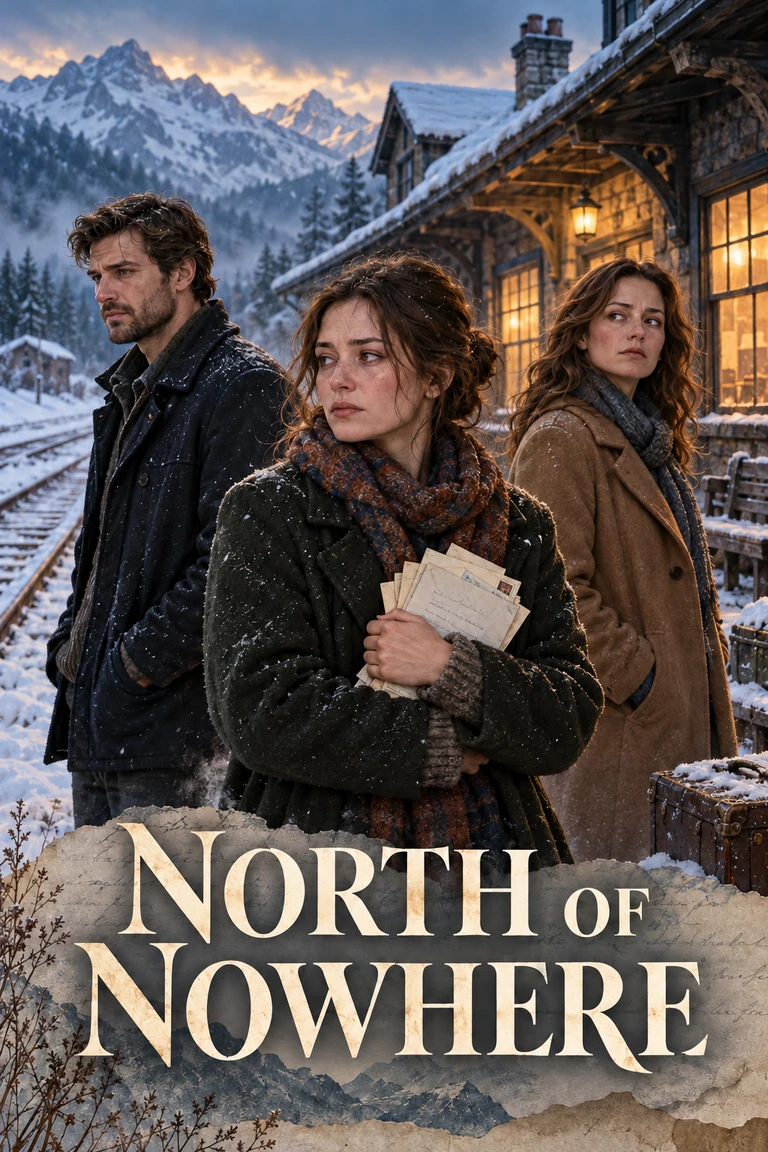
Three estranged siblings inherit a mountain station and their father's unsent letters. As winter exposes the building's neglect, the letters unravel the family story that drove them apart. Saving their inheritance means deciding which promises to keep—and which burdens they can finally put down.
ABOUT CHAPTER 3
The Boundary Line
Ruth reveals shared ownership of the rear land. Jonah admits his hope of buying the station, just as its retaining wall begins to move.
Ep 3 · The Boundary Line
Share a short audio preview
Create up to 20 seconds from 0:00. Available for free opening episodes. Preparing a clip downloads this episode on your device.
Read episode 3
Ruth Vale arrived on foot, carrying a shovel and a bag of onions.
“Which one of you left the gate hooked open?” she asked.
Jonah raised his hand.
“Snow packs behind it. You'll spend an hour digging.”
She handed him the shovel. Tess took the onions, then embraced her so fiercely that the bag fell between them.
Ruth had been Tess's friend's mother, then the person who found her a kitchen apprenticeship. She lived below the station in a cottage beside the old signal hut. Evelyn had spoken to her only twice since the funeral. Both conversations concerned the weather.
Today, Ruth looked at Evelyn and said, “I wondered when you would call.”
Jonah went outside to clear the gate. Tess put the kettle on. Evelyn laid their father's letter on the table.
“Do you know about the boundary?”
“Yes.”
“And about our mother?”
Ruth took off her gloves carefully. “Which part?”
Tess turned from the stove. “That she was leaving him.”
Ruth sat down.
For a moment Evelyn wanted her to deny it. Not because she trusted the old story anymore, but because a denial would delay the work of understanding the new one.
“She stayed with me for nine nights,” Ruth said. “She was looking for somewhere permanent.”
“And you never told us?”
“I thought your father had. Then Tess came to me that spring. She repeated something he'd said, and I understood.”
Tess's hand tightened on the kettle handle.
“You knew then?”
“I knew there was a lie. I asked him to correct it. He said he'd spoken to you. I should have asked you myself.”
Evelyn heard the familiar temptation in Ruth's answer: the hope that admitting one failure might relieve someone of describing the whole thing.
“Why didn't you?” Tess asked.
“Because I was afraid of losing access to you. Because he could be cruel when cornered. Because I told myself you needed stability.”
Tess set down the kettle. “I needed an adult who would say it wasn't my fault.”
“Yes,” Ruth said. “You did.”
The water boiled. Nobody moved until Tess switched it off.
Evelyn expected Ruth to offer a memory of Helen, something warm to repair the conversation. Instead, Ruth unbuttoned her coat and took out a folded plan.
“This is why he mentioned me.”
The plan showed the station, platform, access lane, and sloping land behind the kitchen. A red line cut across what Evelyn had always called their garden.
“Your parents owned the building and the front platform. The old railway company sold the rear strip separately. Helen and I bought it together.”
“Why?”
“To stop a storage yard going in. We borrowed modestly. She paid her half off before she died. I still own my half. Her half passed into her estate.”
“Dad's estate now,” Evelyn said.
“No. Her will left that share directly to you three. Your father handled the paperwork while you were grieving. He held the documents. Ownership didn't move to him.”
Tess pulled out a chair. “We've owned part of that slope for eleven years?”
“Along with me.”
“And the wall?”
“The wall sits on our strip. Maintenance responsibility needs checking against the deeds. Don't assume a line on this drawing answers it.”
Evelyn appreciated the precision even while fury rose through her. Their father had asked her for money to repair his property. Some of it might have been theirs all along. Every arrangement had required him at its center.
Ruth unfolded a second sheet. “Your mother wanted a footpath through to the village. A winter route below the dangerous road. She asked me to keep the idea alive.”
“Did Dad know?”
“He opposed it. Said strangers would bring liability. Later he said you opposed it too.”
“We were never asked,” Tess said.
Ruth nodded once, accepting another thing she should have checked.
Jonah came in with snow on his shoulders. Ruth rose to help Tess carry the groceries into the pantry, leaving Evelyn to show him the plan.
He listened without interruption. Then he opened the kitchen drawer and took out a keyring.
“I need to tell you something before you find it.”
Evelyn's stomach tightened.
“I asked an agent about buying your shares.”
“You want the station?”
“I wanted it. I thought if I could get a number, I could make a plan.”
“You work at a hardware shop.”
“Yes, Evelyn. I know where I work.”
She stopped herself. “I'm asking how.”
“A loan. Some savings. Renting rooms again.”
“You would have worked yourself sick.”
“That seems to be allowed when you do it.”
Evelyn looked down at the plan. She had been working weekends for two years to keep up with expenses she never described as family obligations. Jonah had filled the obligations with his body instead.
“Have you offered anyone money?”
“No. There's a draft valuation in the office. Dad knew I was asking.”
“Did he encourage you?”
Jonah shook his head. “He said I couldn't run it without him.”
Evelyn felt an unexpected, clean anger. “Well. He can't run it at all now.”
Jonah laughed, then covered his face. The laugh collapsed into something else. Evelyn sat beside him without touching him until he leaned against her shoulder.
He cried quietly. She kept still. It was the first useful thing she had done all morning that required no equipment.
When Jonah could speak again, he asked her not to tell Tess.
“That you cried?”
“That I thought I could buy it. Not yet.”
Evelyn wanted to agree. Protecting a confidence felt like a way to recover the kindness they had just found. But the station belonged to all three of them.
“You should tell her yourself,” she said. “Before tonight.”
He pulled away, wiping his cheeks. “You make everything a rule.”
“Maybe. But we've just read what happens when one person knows more about this place than everyone else.”
He looked toward the pantry door. Ruth and Tess were still talking quietly beyond it.
“She's going to think I wanted to keep her out.”
“Then tell her why you wanted to stay.”
He did, after Ruth had put on her coat. Evelyn went outside to check the front step, giving them privacy rather than becoming their interpreter. Through the window she saw Jonah lay the keys on the table. Tess didn't take them. She touched his wrist, and they kept talking.
When Evelyn returned, neither offered her a report. She found she could bear that.
By afternoon the sky brightened. Ruth left by the lower lane, promising copies of the deeds and her own letters from Helen. Tess walked her as far as the gate. When she returned, she had not forgiven Ruth, but she had accepted the documents.
“Those can be separate things,” she said when Evelyn asked.
Jonah found a pencil and wrote all three names at the top of a clean sheet. Below them he added Ruth's name beside the words rear land.
“Anything we decide goes here,” he said. “Even if we argue first.”
“And nobody volunteers someone else's money,” Evelyn said.
“Or time,” Tess added.
Jonah drew a line beneath both conditions. They looked almost absurdly simple. Evelyn wondered why a family could go decades without saying them.
They spread the papers on the ticket counter. The station's possible future became smaller and more complicated. Selling required honest disclosure. Reopening required repairs, permits, and money they did not possess. Abandoning it required admitting that love was not a maintenance plan.
Tess found a notebook in their mother's handwriting beneath the old guest registers. It contained menus, costs, and a page headed Winter Table.
“Soup twice a week,” she read. “No booking. Pay what you can. Walking group Thursdays.”
Jonah looked at the old timetable above the door. “People used to come here just because the light was on.”
“Dad stopped liking that,” Evelyn said.
“Maybe he stopped liking people who could leave.”
Tess closed the notebook. “We don't have to decide tonight.”
For the first time, Evelyn believed that.
Then water began dripping into the office.
Jonah fetched a bucket. Evelyn checked the ceiling and followed the damp line to the rear wall. It was not the roof. The plaster bulged near the floor, dark as a bruise.
She called Jonah back. He crouched beside the skirting, then stood without touching it.
Outside, a slow crack traveled through the frozen garden soil.
The wall behind the station had begun to move.