
Drama · Published by EpicHear
North of Nowhere
The Letters He Kept
First 5 episodes free · 4 more: 4 coins, or free with the 24-hour wait (1 episode a day).
1 coin = 1 episode
About this book
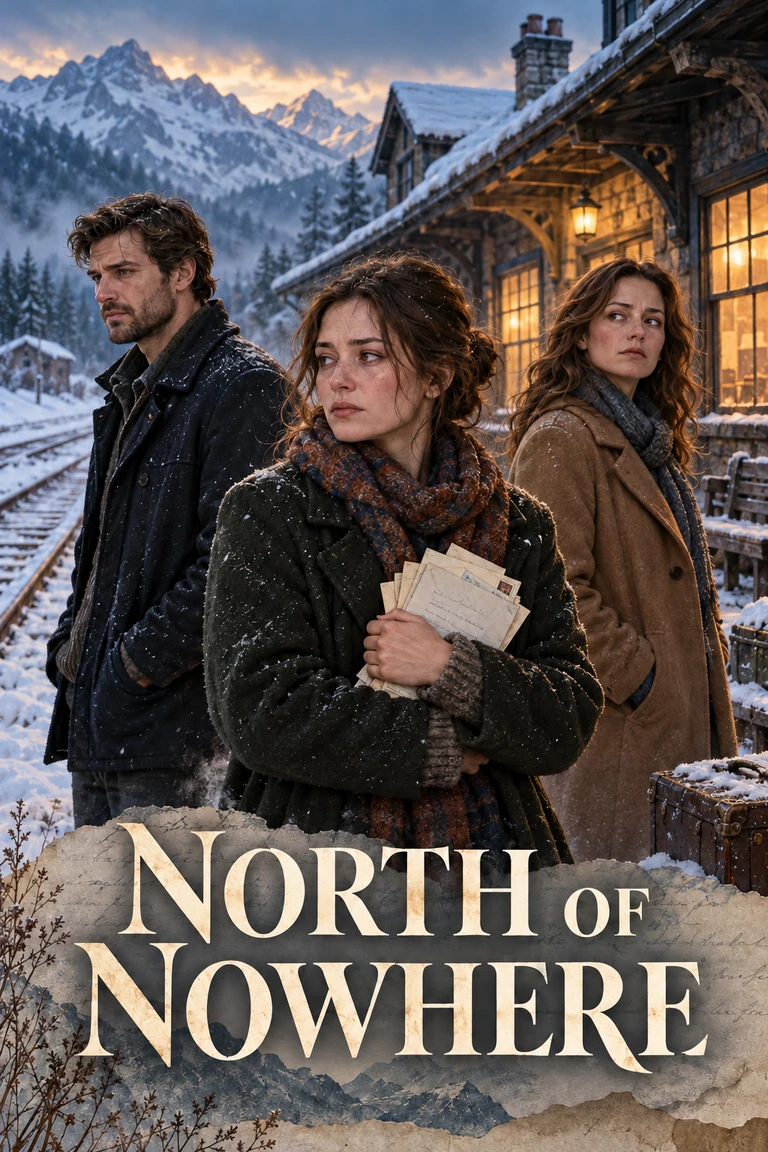
Three estranged siblings inherit a mountain station and their father's unsent letters. As winter exposes the building's neglect, the letters unravel the family story that drove them apart. Saving their inheritance means deciding which promises to keep—and which burdens they can finally put down.
ABOUT CHAPTER 1
The Letters He Kept
Three estranged siblings discover unsent letters in their inherited mountain station; one sentence challenges the story of their mother’s death.
Ep 1 · The Letters He Kept
Share a short audio preview
Create up to 20 seconds from 0:00. Available for free opening episodes. Preparing a clip downloads this episode on your device.
Read episode 1
“Don't turn on the lights,” Evelyn said. “We don't own the electricity yet.”
Her younger brother had already found the switch. The station's long waiting room flared yellow. Beyond its windows, snow lifted off the abandoned platform in thin white sheets.
Jonah kept his finger on the switch. “Dad died. The meter didn't.”
“That is exactly my concern.”
Their sister arrived carrying a suitcase with one broken wheel. Tess had dragged it the last hundred yards uphill. Neither of them had gone out to help her. Now the wheel struck the threshold, and all three heard how much that sounded like their father knocking his boots clean.
“Lovely welcome,” Tess said. “Are we fighting about money already?”
“Electricity,” Jonah said.
“So yes.”
Evelyn took Tess's case. Tess let her, then looked surprised at herself. Six years since they had occupied one room together. Nine since Tess had left the mountain. Their father had managed Christmas calls separately, keeping each conversation short enough to avoid an invitation.
On the ticket counter sat three envelopes. Evelyn recognized the lawyer's square handwriting, not their father's cramped slant. Each contained the same plain explanation. The station belonged to them in equal shares. Debts belonged to the estate. Nobody had to remain through winter. Nobody had been ordered to forgive anyone.
“He couldn't even arrange a dramatic will,” Tess said.
Jonah smiled, briefly. “You'd have hated a dramatic will.”
“I can hate several things.”
Evelyn laid an inventory sheet on the counter. “The road will close after the next heavy fall. We need to drain the upstairs pipes, photograph the contents, and decide whether to list in spring.”
“You already called an agent.”
“Yes, Jonah. Calling is how you learn things.”
He took off his coat. Underneath he wore the blue shirt from the hardware shop where he'd worked since their mother died. He had stayed in the valley, visiting their father every Thursday. Evelyn had paid for roof repairs from three hundred miles away. Tess had sent postcards from kitchens where she worked, always addressed to Jonah.
Each had a different proof of loyalty. Each disliked the others' evidence.
The station had stopped serving trains before they were born. Their parents had turned it into a walkers' hostel, a weather post, and eventually a place to store things nobody wanted to throw away. Their mother had called it North of Nowhere, though its actual name was Alder Station. She painted the words over the kitchen door.
The letters had faded. Evelyn remembered the paint still wet.
Tess went into the kitchen. A pan stood clean on the stove. Beside it, three tins of soup faced forward like an accusation.
“He knew we would come,” she said.
“He bought six tins every month,” Jonah answered. “Don't make arrangements out of groceries.”
Evelyn followed them, bringing the inventory. The kitchen smelled of cold iron. She found the water stopcock beneath the sink and twisted it cautiously. A thread of water coughed into the basin, then steadied.
“There. First useful thing accomplished.”
Jonah watched her. “You could sit down first.”
“If I sit down, you will both decide I'm in charge.”
Tess laughed so abruptly that it hurt. Evelyn nearly laughed too. Then the pipe behind the wall knocked, and they remembered that nothing here worked simply.
They ate soup at the scarred table. Jonah produced bread from his bag. Tess found the good bowls without opening a wrong cupboard. Evelyn pretended not to notice either act of competence.
The empty fourth chair remained between the stove and the window. Their mother had sat there, turning her head toward the track whenever a wind gust sounded like a train. Their father had never moved it. Evelyn wanted to put it upstairs before anybody said what it meant.
Instead, she asked about the records.
“Office,” Jonah said. “Top drawer. Everything's paid through November.”
“Everything?”
He put down his spoon. “That wasn't a guess.”
Evelyn apologized. It came out stiffly, but she did it.
Before they finished, Jonah asked where Evelyn would sleep. She said she had booked a room in the village.
“Of course you have,” Tess said.
Evelyn put down her spoon. “The upstairs heating hasn't worked properly for years.”
“I wasn't accusing you.”
“You sounded like you were.”
Tess looked tired suddenly. “Maybe I don't know how to sound in this kitchen.”
Jonah broke the last piece of bread into three uneven portions. He gave Tess the largest without comment. Evelyn watched her sister accept it. There were habits of care here that had survived her absence. Recognizing them made her feel both relieved and unnecessary.
“I can cancel the room,” she said.
“Nobody asked you to,” Jonah answered gently.
She knew that. It was what made the decision difficult.
After lunch, Tess washed the bowls while Jonah checked the stove flue. Evelyn entered the office. The desk was smaller than memory. Their father had once seemed permanently seated behind it, issuing instructions through the open door. He had run a building with nineteen beds as if it were a country under siege.
The drawer contained invoices, a bundle of receipts, and a brown ledger. It also contained a hospital appointment card dated two months before his death.
Evelyn stared at it. Their father had told her he had indigestion. She had recommended smaller dinners, briskly, from a supermarket queue.
Beneath the card lay a key labeled POST.
There had never been a post office here. Guests left letters in a wooden box by the front door, and their mother carried them downhill on market days. After her death the box became a home for gloves.
Evelyn took the key to it. Jonah came down the stepladder when he saw her kneel.
“That's locked?”
“Apparently.”
Tess dried her hands and joined them. The little door opened without resistance. Inside stood seven bundles of envelopes tied with ordinary kitchen string. Their names appeared on them in their father's handwriting.
No stamps. No postmarks.
Tess reached first, then stopped. “When?”
Evelyn lifted the bundle addressed to her. The top envelope carried last February's date. Beneath it was one dated eleven years earlier.
Jonah found his own. “He saw me every week.”
Nobody answered.
They carried the bundles to the kitchen table. Evelyn wanted to sort them by year. Tess wanted each person to take their own upstairs. Jonah wanted to put them back until morning.
For once, Evelyn recognized three reasonable plans.
“They belong to whoever they're addressed to,” she said. “We can agree that much.”
Tess slid a finger beneath an envelope flap. Then she pushed it away.
“What if it's another explanation of how I disappointed him?”
“Then you can burn it,” Jonah said.
Evelyn looked up sharply.
“Her letter,” he reminded her.
Outside, the first thick flakes settled against the glass. The forecast had called for snow overnight, not now. Evelyn checked her phone. One bar appeared, vanished, returned. Her return ticket for tomorrow sat beneath the weather notification.
“I should check the road,” she said.
“You should read your letter,” Tess answered.
Evelyn opened the oldest one. The paper was cheap, ruled, torn from a notebook. Her father had crossed out the first sentence so thoroughly it became a black bar.
Evelyn, you asked whether I wanted you to stay after the funeral. I said no. It was the easier answer. It let me blame you later.
She read it twice. Her father had never used the word blame about himself.
Jonah turned over an envelope without opening it. Tess watched the snow.
“There's something wrong with this,” Evelyn said.
“The whole situation?” Tess asked.
“The date.”
Evelyn held the page beside its envelope. The letter had been written three weeks after their mother's death. It continued on the reverse, where the ink had smudged beneath a thumb.
You think your mother came up the west road because of your sister. I allowed you to think it. I have written the next sentence four times and still cannot make myself send it.
Evelyn could hear the stove ticking. She knew Tess was standing now, though she had not heard the chair move.
At seventeen, Tess had run away to a friend's house during a storm. Their mother had driven out that night and never returned. That was the story their family lived inside. It had rooms, rules, punishments. Evelyn had helped enforce them.
She turned the paper. There was only one sentence left.
Your mother was not coming to collect Tess.